
Mastering Quartz and Diamond Infrared Temperature Measurement
Quartz and Diamond Infrared Temperature Measurement requires more than standard techniques — it demands advanced infrared sensing solutions that overcome the challenges of low emissivity, material transparency, and extreme environments such as plasma chambers and high-temperature fusion zones. This guide explores how to achieve accurate, reliable temperature control in these specialized applications using cutting-edge non-contact pyrometry.
Table of Contents
Introduction: Why Measuring Temperature in Quartz & Diamond Processes Matters
Accurate temperature measurement in quartz fusing, lab-grown diamond synthesis, and diamond plasma processing is vital for ensuring material quality, process control, and energy efficiency. These high-temperature operations involve unique challenges such as transparency, low emissivity, and reactive environments. Mastering infrared pyrometry in these contexts empowers manufacturers to optimize performance, reduce defects, and enhance safety.
Measurement Technologies and Industrial Applications
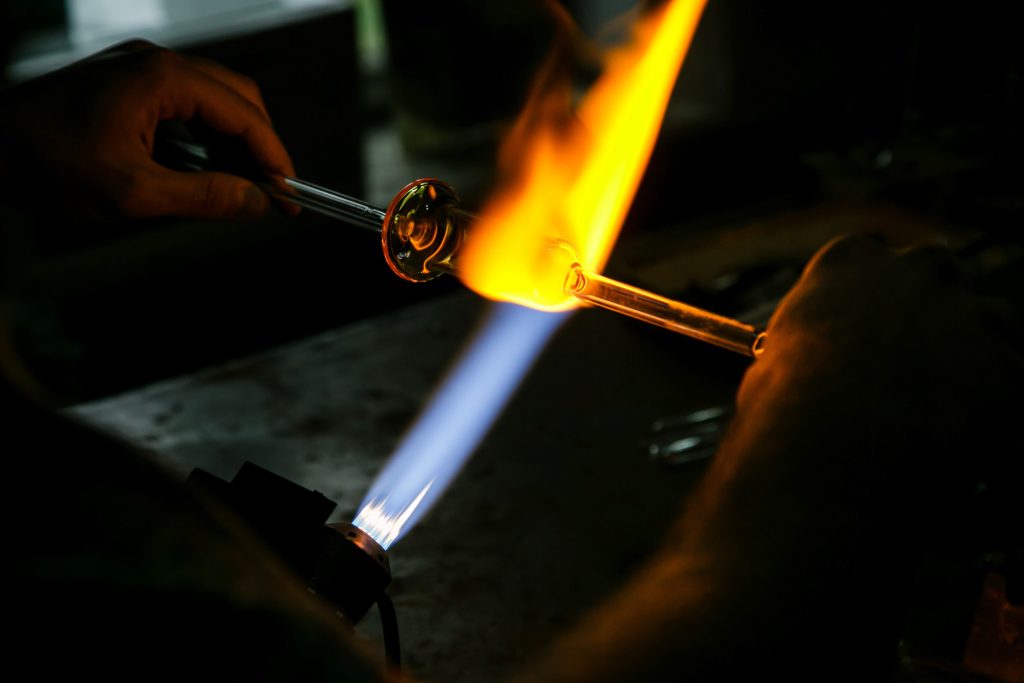
- Quartz Fusing Temperature Monitoring
- Fused-quartz production requires temperature control within ±5 °C for clarity and mechanical strength
- Non-contact infrared pyrometers monitor glass viscosity and molten quartz level.
- Pyrometry for Lab-Grown Diamonds
- CVD reactors require precise thermal control (~700–1200 °C) under vacuum or plasma.
- AST’s single- and multi-wavelength sensors compensate for low emissivity and quartz window interference.
- Plasma-Process Diamond Temperature Profiles
- Methane plasma introduces intense radiation and rapid temperature changes.
- Infrared sensors with high-speed response and radiation shielding capture real-time thermal data for process consistency.

Calibration and Measurement Challenges
- Low emissivity & transmissive windows: Quartz and diamond surfaces reflect most IR energy, complicating measurement. Use dual/multi-wavelength pyrometers and in-situ calibration.
- Reactive atmosphere & plasma effects: May require purge gas or protective enclosures around sensor optics.
Best Practices & Integration Tips
- Choose sensors with appropriate wavelength (1–5 µm) to minimize glass-window absorption.
- Maintain clear line-of-sight; install viewing ports 500–1000 mm from the material with purged sight glasses.
- Use real-time calibration curves and closed-loop temperature control via PLC or DCS.
Visual Demonstrations
Quartz Fusing Process Controlled with AL514 Pyrometer – AST Infrared Solutions
Diamond temperature measurements through methane plasma
Summary Of Quartz and Diamond Infrared Temperature Measurement
This guide details how infrared pyrometry is tailored for high-temperature quartz and diamond processes—addressing transparency, low emissivity, plasma environments, and measurement accuracy. By selecting the right sensor, optimizing installation, and integrating with controls, manufacturers can achieve repeatable, defect-free results.